
Car sun film, or window tint, is an extremely thin protective film that is overlaid on the car windows. It is meant to regulate the sunlight in the car and enhance general comfort in driving. Tinting of car windows will assist in reducing the level of heat within the car and avoiding exposure to excessive ultraviolet (UV) rays and sun and headlight glare. It also protects the interior of the car, such as the seats, dashboard, and upholstery, against the wear and tear that is experienced as a result of overexposure to the sun.
Nowadays, window tint is a feasible and necessary feature for the majority of car owners. Driving longer hours with the rising temperatures, it is more important than ever to keep a cool and comfortable interior of the car. Nevertheless, during the process of selecting the tint for the window, it is also crucial to adhere to the legal window tint percentage, which is approved by the RTO. With legal window film, you will not only have easy visibility and be able to drive safely, but also avoid paying traffic fines even as you enjoy the advantages of car sun film.
What is Car Sun Film and Window Tint?
Car sun film is a special film that has been designed and that has been placed on the interior surface of the car glass. It controls the amount of sunlight passing into the car and helps in keeping the car at a comfortable temperature. Tinting of windows is highly utilized in the removal of glare, protection of passengers against UV radiation, and privacy. There is no effect on visibility, and when correctly used, it does increase the comfort of driving.
Key Benefits and Features of Window Tint
Tinting windows has got a number of advantages that make the driving process safer and more comfortable.
Heat Reduction for a Cooler Car
Tinting of windows greatly minimizes the amount of heat that comes into the car by the windows. It prevents the car from being hot even on hot summer days and gives long-distance drivers and guests more comfortable positions.
UV Protection for Health and Interior Safety
The window film prevents up to 99 percent of the malicious UV rays. Not only would this help in keeping skin and eyes safe in the sun, but it also prevents the cracks or degradation of the inside of the car like the seats or the dashboard since it might be old.
Reduced Glare for Safer Driving
The window tint color eliminates the glare created by the sun and the streetlights, therefore, enhancing the visibility. This is perceived to relieve the burden on the eyes and makes driving far safer both during the day and at night.
Improved Privacy and Security
The tint of the windows restricts the sight into the vehicle. This gives passengers greater privacy, and it also gives added security by ensuring that valuables are not in view.
Enhanced Vehicle Appearance
The car must possess a compelling and elegant look. It improves the overall appearance of the car and brings it nearer to a high-end and modern look.
Why is Window Film Used Today?
Use of window film has become very common nowadays owing to the fact that the circumstances of modern-day driving require protection and comfort.
Protection from Rising Temperatures
This means that during hot weather, vehicles heat up very fast once they are exposed to the sun. This heat is controlled with the help of window film and makes the cabin cooler.
Comfort During Long Drives
People are reported to spend hours in traffic or on the highway. Coloured windows will reduce heat and glare, enabling long-distance driving to be more comfortable and less tiring.
Better Fuel Efficiency
The window film also reduces the utilization of the air conditioning as it reduces the amount of heat generated in the car. This can be used to increase fuel economy and will reduce the fuel costs in the long term.
Affordable and Long-Lasting Solution
One of the options is window film, which is very cheap and has a long life span. It has minimum maintenance and long-term benefits.
Types of Window Film/Tint
There are different types of window films available to suit different needs and budgets.
Dyed Window Film
An easy and cheap material is dyed window film. It minimizes glare and offers a rudimentary amount of heat protection. This kind of movie is applicable to car owners who want to have an affordable movie.
Metalised Window Film
Metallized window film is stronger in rejection to heat as opposed to dyed films. It is powerful, tough, and resilient. It can, however, be somewhat reflective.
Carbon Window Film
Carbon window film offers adequate heat control and a non-reflective appearance. It is not petty and provides a reasonable balance between performance and look.
Ceramic Window Film (Best Choice)
The most modern one is the ceramic window film. It provides maximum heat and UV coverage and is still clear. It does not disrupt mobile or GPS signals, and it is worthwhile for the person who requires high-quality comfort and performance.
Understanding RTO-Approved Legal Window Tint Percentage
Indians have legalized the use of window tint according to Visible Light Transmission. VLT refers to the degree of natural light that is diffused through the car glass. The higher the VLT percentage, the lighter and more transparent the glass is. There are specific regulations positioned by the RTO and traffic authority to ensure that the visibility of the drivers is clear and that road safety is taken care of.
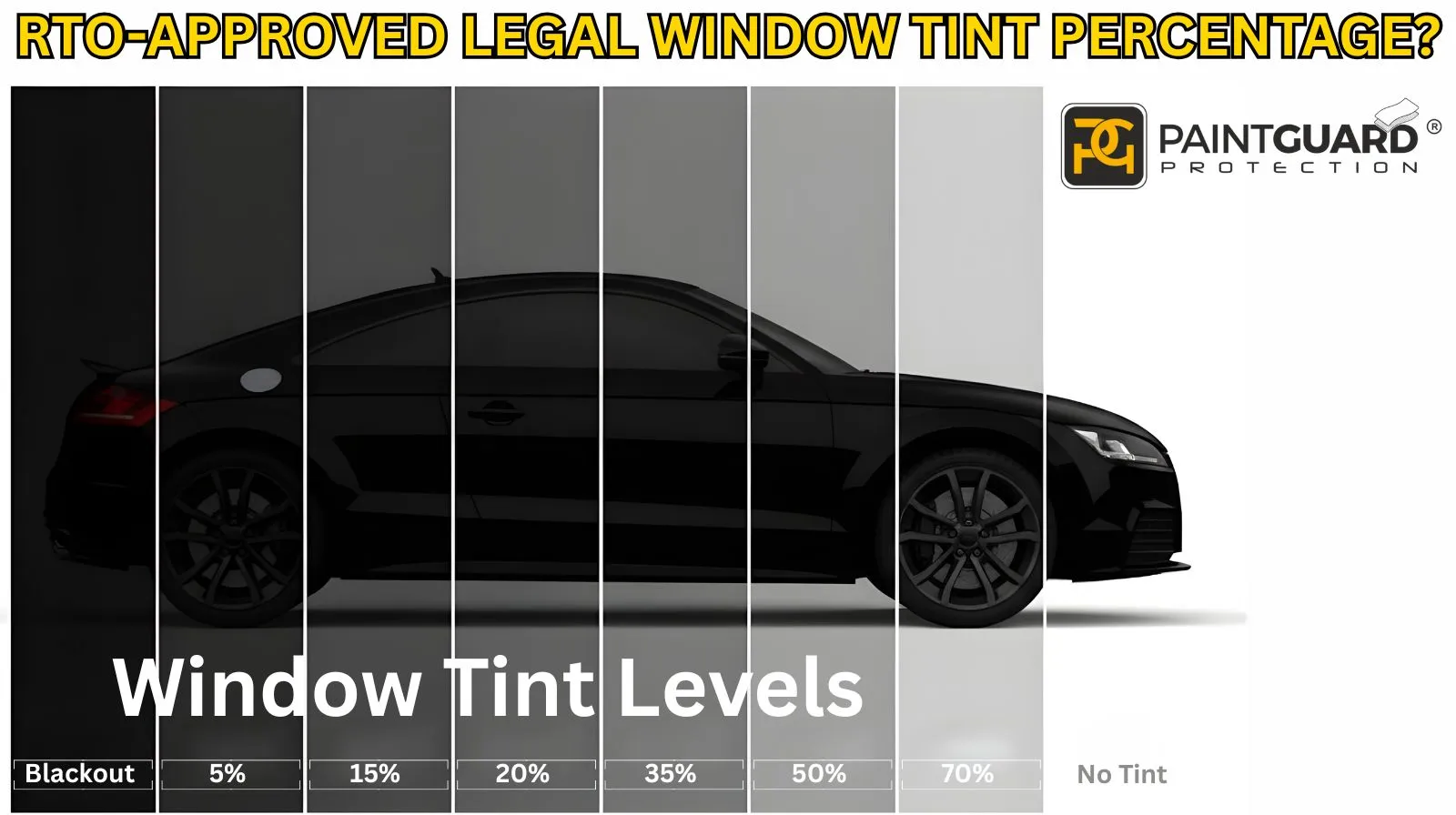
According to the RTO and the Supreme Court in India, the maximum percentage of tint in the window is
- Front windshield: A minimum of 70% VLT is permitted.
- Rear windshield: VLT of at least 70% should be permitted.
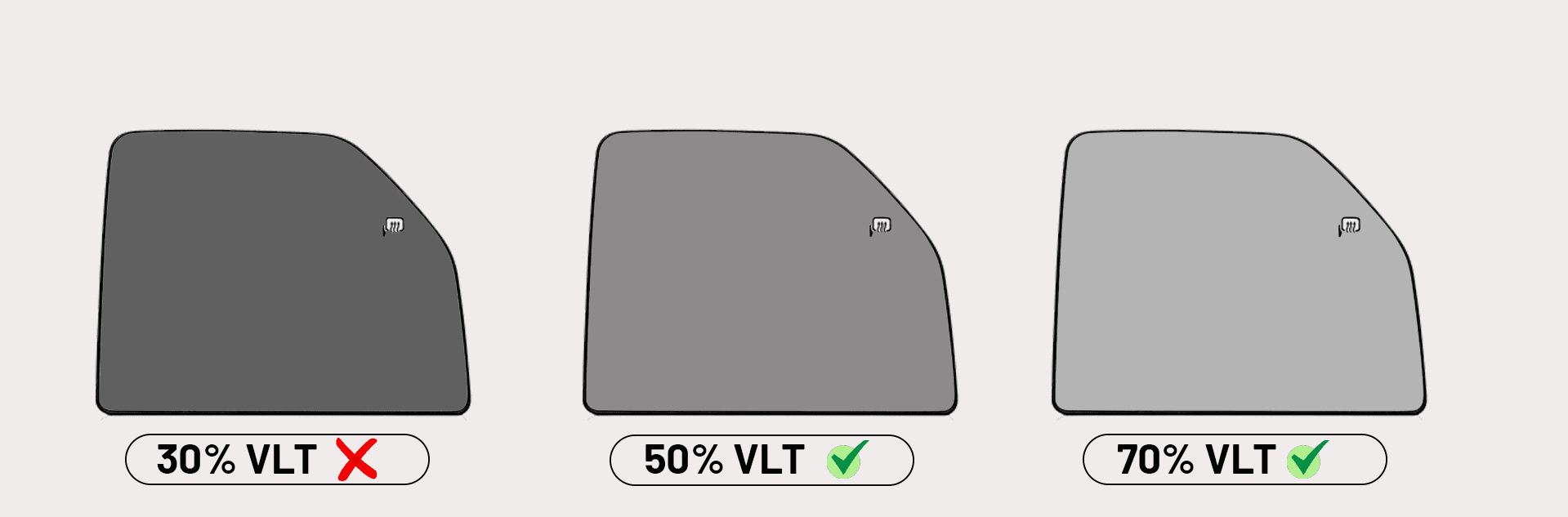
- Side windows (left and right): A minimum of 50% VLT shall be permitted.
This means very dark window tints are not legal. Any film that reduces visibility below these limits can result in fines or penalties. Only light and transparent window films that meet these VLT percentages are permitted.
How to Choose the Right Window Film for Your Car?
The selection of appropriate window film will be based on your driving requirements, the climate in your area, and the legal requirements of the window film tint. One should choose a good film that is capable of providing adequate heat cover and remains within the legal requirements. The professional counseling will help you make the correct decision regarding your car.